Harvest Life
Spirituality/Belief • Lifestyle • Culture
Suffering: The Climb Before the View
This article is based on a conversation from Episode 198 of the Into the Harvest podcast.
July 08, 2025
post photo preview

Sometimes life is like a wilderness. It’s a dry and weary land with no water, uncomfortable rest, often too windy and too sunny with no shelter. We can go through seasons where we are buffeted not by the elements, but by various circumstances. But even in these tough seasons, God is working in ways you can’t always see. These hard times can be moments when God is preparing us for something greater.

In Good Company

One person in the Bible who went through many difficult times was Paul. He faced beatings, shipwrecks, and even being in danger from people he trusted. In 2 Corinthians 11:24-26, Paul says, “Five times I received from the Jews the forty lashes minus one. Three times I was beaten with rods, once I was pelted with stones, three times I was shipwrecked, I spent a night and a day in the open sea, in danger from rivers, bandits, and even my own people.”

What many don’t realize is that most of Paul’s struggles happened during years that are not fully detailed in the Bible. These years shaped him into the person God needed him to be for his ministry. God used Paul’s time in the wilderness to help him grow stronger in his faith and become the leader he was meant to be.

The Break Down and the Build Up

But why does God allow us to go through difficult seasons? The answer is to test us like silver, that we might be more intimate with God and better prepared for the work He has for us to do (Proverbs 25:4, James 1:2-4, Job 23:10). Moses, Jesus, and Paul, went through times of isolation and hardship. These times were all for the purpose of being tested and prepared before God used them in big ways.

For the sake of clarity, we are not talking about a wilderness caused by our own sin. God does not cause us to sin, and we (unfortunately) inflict that kind of “wilderness” on ourselves (Psalm 34:10, James 1:13-15).

God doesn’t send hard times to test us because He doesn’t know what’s in our hearts—He already knows us perfectly. Instead, these struggles help us see how much we actually trust Him, or how much we don’t.

Going through the wilderness changes us. It makes us weaker in ourselves, stronger in Christ, and closer to God. All of these cultivate the soil of our hearts and lives to walk into what God has for us.

Leaning into Love

While you may not experience the same suffering as Paul, you do experience suffering. You experience unmet expectations, unforeseen tragedy, death, declining health, feeling alone, or the anxiety of waiting for something to change. 

In the midst of these kinds of suffering, console yourself with God’s movement. He is shaping you and preparing you for His purposes in your life (Romans 8:28). It’s good to note here that we shouldn’t try to console ourselves with what the purposes our. It would be unwise to try to name what God is preparing us for, because then our hope is not in Christ and our trust not in God, but rather in the outcome of our lives. We can’t know the shape of the “something bigger,” but God does.

So, if we’re not supposed to think about what it’s all for, what are we supposed to do during these times? 1 Peter 4:19 says, “So then, those who suffer according to God’s will should commit themselves to their faithful Creator and continue to do good.” This verse is specifically speaking to those undergoing persecution, but the principle applies to our suffering.

While you’re going through a difficult season, however long it may be, lean into it by committing yourself to the Lord (Jeremiah 33:3). Don’t let hard things make you bitter or lazy in your faith. Continue to devote yourself to the Word, to prayer, to fellowship, and to sharing your faith. Do good, and all that that means. 

Something’s Gotta Give

Just like Paul, Moses, and Jesus, we will all face tough seasons. But these seasons are not meant to break us. They help us grow in our faith and prepare us for what God has planned for us. If you’re going through a difficult time, remember that it won’t last forever. When you come through it, you will be stronger and more prepared for the epic things God has ahead.

Keep trusting God, even when things don’t make sense. Lean into Him and do good; He is faithful, and He will guide you through the wilderness into His purposes for you.


community logo
Join the Harvest Life Community
To read more articles like this, sign up and join my community today
0
What else you may like…
Videos
Posts
Articles
This Will Take You Out Of The Fight Every Time

What do y’all think about this? True? Untrue? Personally, I think he’s spot on.

00:02:37
One of the Most Important Yes’s You Can Give

Jesus invites us into His mission, when He didn’t have to. How do you feel about that?

00:01:43
Meditative Prayer Journaling

What do y’all think of Alex’s meditative prayer journaling? Would it be helpful for you?

00:01:21
Harvest Life Community Guidelines

Welcome to Harvest Life—the premier online space for everyday disciple-makers. This is more than a content hub. It’s a community. A place where we live the mission, share the harvest, and build each other up as we follow Jesus together.

These guidelines exist to help us protect the culture we’re creating and stay focused on the reason we’re here.

1. Stay on Mission

This is a place for people committed to following Jesus and making disciples in the everyday places of life. Keep your posts, comments, and contributions centered on:

Discipleship and disciple-making
Spiritual growth and formation
Biblical insight and encouragement
Practical tools and stories from the harvest field

2. Be Real, Be Respectful

We’re here to build each other up—not perform or prove something. Share honestly. Speak kindly. Assume the best in others. Ask questions with humility, and respond with grace.

3. Contribute, Don’t Just Consume

This isn’t a one-way platform. It’s a shared space. Whether you’re ...

post photo preview
October 16, 2026
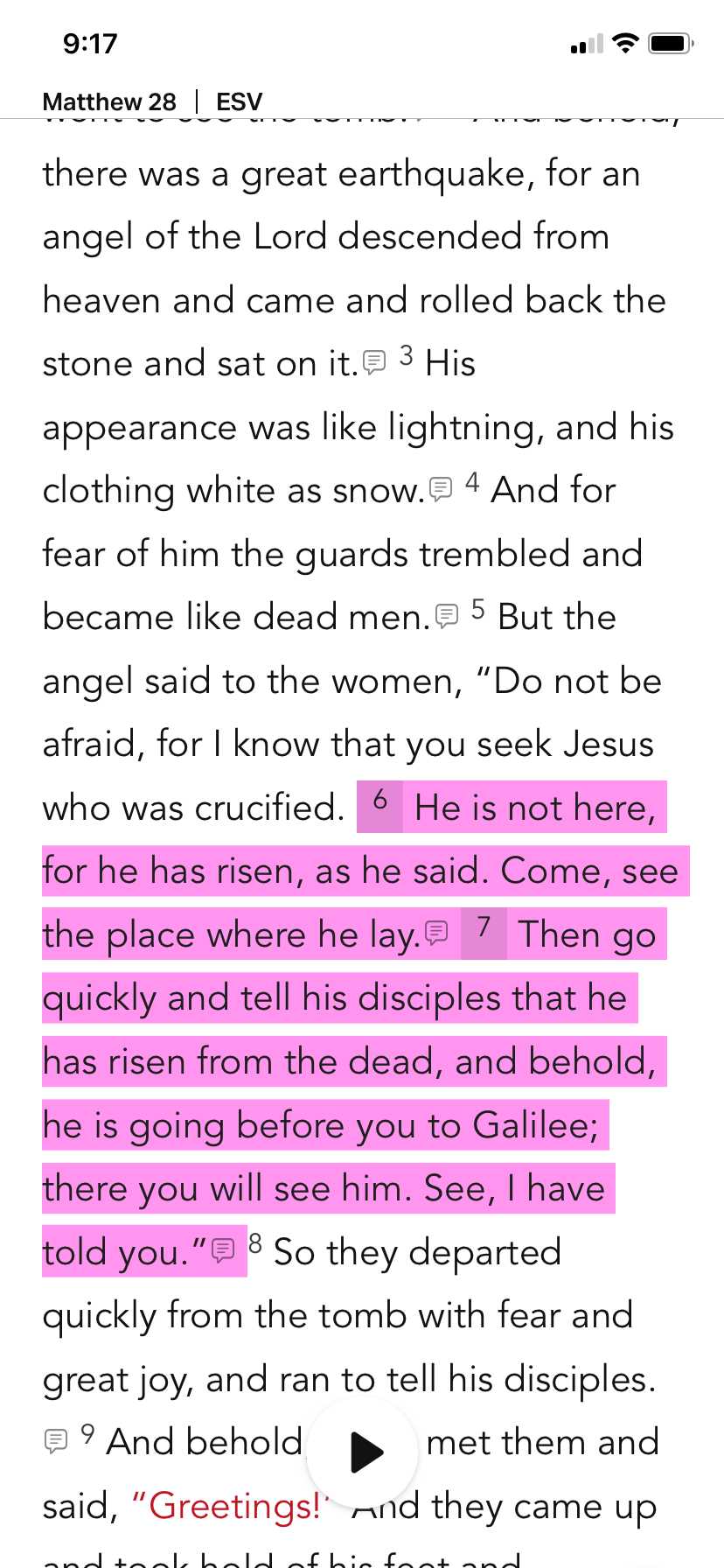
Come and See

One of the on-going conversations we keep having is the “come and see”. Invite people in to come and see, like Jesus invited John’s disciples.
Today in my quiet time I see this: come and see, then go and tell.
Once we have seen and we know, there should be a “go quickly and tell” mindset.
Who can you tell Jesus to? What he has done, what you have seen, what he is doing now in your life?

post photo preview
October 08, 2026
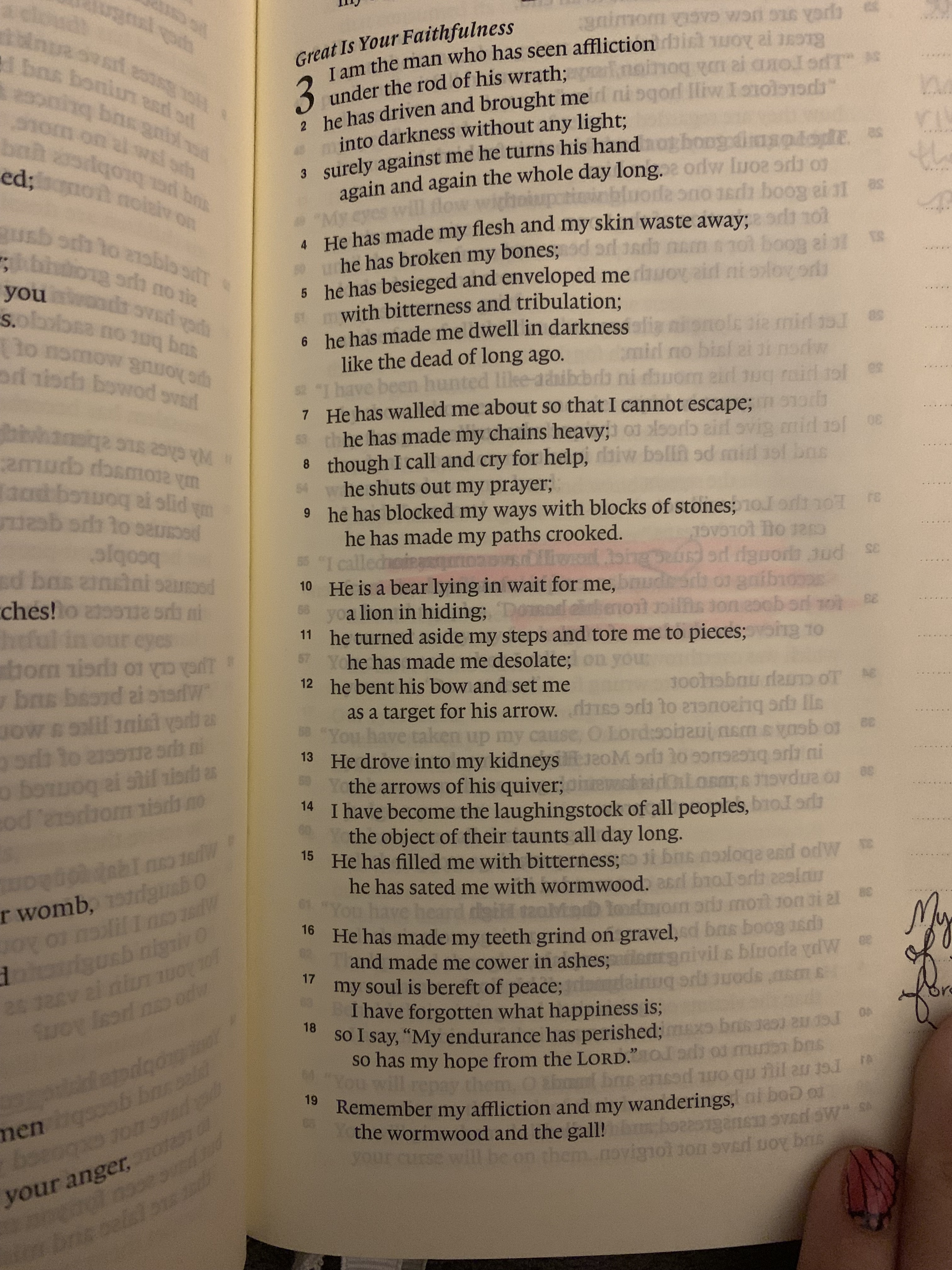
Quiet time thought

As I am going through my time in the word this morning, I found myself thinking “what a poorly named chapter”.
Great is your faithfulness? “Surely against me he turns his hand”, “he is a bear in waiting for me”, “he bent his bow and set me as a target for his arrow”, and the lowest moment in my opinion “my endurance has perished; so has my hope in the Lord”

There have definitely been seasons in my life where I can’t help but look skyward and say “really? Is this happening? Are you there?” And Jeremiah’s words this morning really reminded me of those days.
But then you turn the page and his lament continues.

“But this I call to mind and therefore I have hope: the steadfast love of the Lord never ceases; his mercies never come to an end; they are new every morning; great is your faithfulness. The Lord is my portion says my soul, therefore I will hope in him.”

I love the switch from “his” to “your” in Lamentations 3, like all of the sudden his soul ...

post photo preview
October 20, 2026
post photo preview
Busy for God, but Are You Following Him?

Every night before bed we read the Bible together as a family. We have gone through the gospels and we are in the Old Testament. We recently started 2 Samuel. One story caused such an uproar that we had to sit down and talk through it: the story of Uzzah in 2 Samuel 6.

Why Was Uzzah Punished for Touching the Ark?

At this point in history, David is hoping to bring the Ark from the house of Abinadab to Jerusalem. As the cart is heading to its new destination, we have this in verses 6 and 7:

When they came to the threshing floor of Nakon, Uzzah reached out and took hold of the ark of God, because the oxen stumbled. The Lord’s anger burned against Uzzah because of his irreverent act; therefore God struck him down, and he died there beside the ark of God.

The confusion and frustration that erupted in our living room at these two verses was swift. “Why was Uzzah punished? Was he meant to let the ark fall? Why is it irreverent?” The kids have real concerns. When we pull apart the story, we can see that many of us are living where Uzzah is, an arms length from destruction.

Uzzah and the Ark: Familiarity with the Things of God

The ark ends up in the home of Abinadab (1 Samuel 7) after it is returned from being with the Philistines. It brings nothing but bad news to the enemies of the Lord, and they quickly devise a plan to send it back to God’s people. After it crosses the border, it ends up in the home of Abinadab and stays there for years. What does this have to do with Uzzah?

If we go back to 2 Samuel 6:3

They set the ark of God on a new cart and brought it from the house of Abinadab, which was on the hill. Uzzah and Ahio, sons of Abinadab, were guiding the new cart

Uzzah has spent years living in the same house as the ark. He has seen it, grown familiar with being around it and very likely forgotten the awesome power behind it. God, who knew Uzzah’s heart, calls his action “irreverent”. We can imagine he didn’t respect what the ark represented when he reached out.

Doing God’s Work According to God’s Instructions

1 Chronicles 15:13-15 gives us this last piece of the puzzle:

It was because you, the Levites, did not bring it up the first time that the Lord our God broke out in anger against us. We did not inquire of him about how to do it in the prescribed way.” So the priests and Levites consecrated themselves in order to bring up the ark of the Lord, the God of Israel. And the Levites carried the ark of God with the poles on their shoulders, as Moses had commanded in accordance with the word of the Lord.

The Israelites didn’t ask God how to go forward; they just went. The Ark shouldn’t have been on a cart with the sons of Abinadab. It should have been on poles on the shoulders of Levites. They didn’t follow the law. They didn’t ask God for the information; they just went forward with their plans and busyness.

Does Religious Busyness Reflect Obedience to God?

Many of us are living lives near God’s kingdom: in churches, discipleship communities, and Bible studies. Are we living under His lordship, or are we so comfortable with the proximity that we are irreverent? I look holy by being where I am, even when my heart posture is haughty. We want to be saved from Hell but don’t want to live as part of His Kingdom, bending the knee to His decree.

There can be a busyness that looks like kingdom work while the heart posture is far from where it ought to be. In fact, that is Uzzah. He is bringing the ark of the Lord into the city of David, without having consulted God for the plan. We can be running a thriving ministry and have a heart posture of irreverence.

Following Jesus Means Submitting to His Lordship

When I think the harvest is mine, the ministry is mine and the people are mine, I have made myself god. I can’t make a disciple. I can join God where He is working on someone. Trusting Him, I can obey and follow. You and I can’t make Him Lord in our lives. He is Lord. That is the title He holds. We can submit or we can wage war against Him.

If your ministry responsibilities disappeared tomorrow, what would your relationship with Jesus look like? Uzzah was involved in bringing the ark to Jerusalem. Where might you also be doing work for God while disregarding His instructions? Have you accepted Christ’s gift of salvation but denied His authority as Lord? What areas of your life are you not willing to submit?


This article was spurred on by the conversation started here.

Read full Article
October 06, 2026
post photo preview
Biblical Submission in Marriage
Ephesians 5

All over my socials, I see the Netflix documentary “The Death of a Pastor’s Wife” being discussed. It wasn’t until submission started popping up in many of my conversations that I decided to hash it out here. We’ve lost the point of submission and buried it under modern thoughts. Let’s go back to the controversial Ephesians 5 passage.

What Does Ephesians 5 Say About Submission?

Submitting yourselves one to another in the fear of God. Wives, submit yourselves unto your own husbands, as unto the Lord. For the husband is the head of the wife, even as Christ is the head of the church: and he is the saviour of the body. Therefore as the church is subject unto Christ, so let the wives be to their own husbands in every thing. Ephesians 5:21-24

Submission is a loaded word. But are we bringing our assumptions to this passage before we hear what Paul is saying. Paul uses submit, which comes from a Greek military term and is used to show they are under the command of a leader. When used in a non-military way, it means it’s a voluntary attitude of giving in and cooperation. The way we submit to one another is voluntary. When Jesus saw the distress of his parents in Luke 2, He voluntarily left His Father’s house and obeyed His parents.

Why were you searching for me?” he asked. “Didn’t you know I had to be in my Father’s house?” But they did not understand what he was saying to them.
Then he went down to Nazareth with them and was obedient to them. But his mother treasured all these things in her heart. Luke 2:49-51

This is when Jesus was a boy, and He stayed back at the temple, causing His parents to have to search for Him. He tells them, “Didn’t you know I had to be in my Father’s house?” This is where Jesus belongs, but He was “obedient” to his parents. That’s an authority that God put over Jesus in that season. The word obedient here is the same word we use in Ephesians 5:24 where wives submit to their husbands. That same root word is there in Romans 13 where we are told to submit to governing authorities. When we find ourselves struggling with submitting to authority, we can recognize that Jesus has walked that walk. Both with God (“Not my will, but yours”) and with people. He had a place He had to be, but allowed Himself to be subject under those who God put above Him.

Is Submission Only for Wives?

Biblical submission isn’t a gender based topic. It’s not “women must submit”, it is an overarching biblical principle that everyone needs. Jesus walked it out in obedience with His parents. We also see in Ephesians 5:21 that we as a body should be submitting to one another, and in Romans 13 we are called to submit to governing authorities. Why does God give us these places and roles in which we must submit?

Do nothing out of selfish ambition or vain conceit. Rather, in humility value others above yourselves, Philippians 2:3


Submission in Marriage: Facing Fear and Choosing Trust

Submitting requires us to put aside our wants, ambitions ,and vanities and trust someone else. But what if I don’t trust them? What if the rulers and authorities don’t have my best interests in mind? Submitting requires my eyes to go from the person over me, past them to God. Can I trust God to be sovereign when the authorities are wicked? Can I trust Him to lead me if my husband isn’t acting godly? Will He still be good if this doesn’t go my way?

Ladies, we struggle with fear. It is so easy to say “I am safer when I am in control” and refuse to submit. Submitting to our husbands is submitting to God. He is asking us to die to our selfish ambition and value our husbands over ourselves.

What Does Ephesians 5 Ask of Husbands?

In this same way, husbands ought to love their wives as their own bodies. He who loves his wife loves himself. After all, no one ever hated their own body, but they feed and care for their body, just as Christ does the church. Ephesians 5:28-29

Men you aren’t off the hook here. Not only are you called to submit to one another in verse 21, but then it’s added that you have to love your wife. The love used in this verse is the selfless love that doesn’t demand anything in return. If women struggle with fear, men struggle with pride. Both calls in Ephesians call us to live outside of our comfort: Women must trust their husbands, and husbands must put themselves to the side to deeply love their wives.

If we both lived in that dynamic, submission would always be seen as a beautiful action. Our marriages are training grounds for how we walk with God. They are a witness to His goodness as they actively sanctify us. A healthy marriage is a beacon to the outside world.

Living Out Biblical Submission in Community

While we walk in discipleship relationships we must call the men and women under us into Titus 2 walks. Men need to be taught to be self-controlled and how to be an example of good works with integrity. Women need to be taught to be reverent and how to love their husbands and children. This happens in a community where lives are lived together. If you aren’t actively in each other's lives, you cannot correct and call people forward. Who knows your marriage well enough to challenge the way you love, lead, trust, or respond when you’re wrong? Does your pride get in the way of your obedience?

Read full Article
September 22, 2026
post photo preview
Slow Obedience Is Disobedience: Responding When God Calls

“Slow obedience is disobedience”

The first time I heard this phrase uttered it came from the mouth of a mother of many. She had a large family, and was explaining how this phrase was changing the culture in her home. If she called for a child, and they called back “in just a minute,” the phrase “slow obedience is disobedience” would be called back. Maybe this seems extreme to you, but it was working wonders for her.

Why Slow Obedience is Disobedience

God tells Moses in Numbers 13 to send people into the land that He is giving them. Men are chosen and spend forty days gathering information on the land.

They gave Moses this account: “We went into the land to which you sent us, and it does flow with milk and honey! Here is its fruit. But the people who live there are powerful, and the cities are fortified and very large. We even saw descendants of Anak there. Numbers 13: 27-28

The land does flow with milk and honey, the fruit is amazing. This land is a blessing and already promised to them. But their eyes drift to the reason not to obey. The people are powerful, the cities are strong, there are even giants there: we cannot go.

Focusing on the Obstacles Instead of God

Then Caleb silenced the people before Moses and said, “We should go up and take possession of the land, for we can certainly do it.” But the men who had gone up with him said, “We can’t attack those people; they are stronger than we are. Numbers 13:30-31

I’m struck reading these next few verses by where their eyes are fixed. They say “we can’t do this” to counter Caleb’s statement that “we certainly can.” They are looking at their own hands and saying “these cannot accomplish the task laid before us”. Their stubbornness peaks when they declare in Numbers 14 that they are going to stone the current leaders, appoint new ones, and walk back to slavery. God lays down punishment, telling the people that they won’t be going into the land, but will meet their end in the wilderness.

When Delayed Obedience Becomes Further Disobedience

When Moses reported this to all the Israelites, they mourned bitterly. Early the next morning they set out for the highest point in the hill country, saying, “Now we are ready to go up to the land the Lord promised. Surely we have sinned!” Numbers 14:39-40

“Now we are ready to go.” Slow obedience is disobedience. He said “Go” and they dug in. When they finally decided to obey the call to come into the land, they were willing to do so disobediently. They had been told to go back to the wilderness, but again went to assert their will over His. God’s patience has given way to judgement, due to their hard hearts. These stubborn people saw a land of milk and honey, and forgot what God could do with them. They didn’t trust God’s provision so much that they longed for the abuse of Egypt.

Jesus Calls Us to Follow Him

“Come, follow me,” Jesus said, “and I will send you out to fish for people.” Matthew 4:19

Jesus has a promised kingdom He is inviting us to come into. The kingdom of God is in the midst of us in the here and now. We have to cast our eyes past the reasons to ignore the invitation. There are still sin giants in the world around us, but God is going with us into the land to drive them out. Jesus has given us the path and the promise to follow. Are we willing to come and do so?

The Disciples Respond with Immediate Obedience

At once they left their nets and followed him. Going on from there, he saw two other brothers, James son of Zebedee and his brother John. They were in a boat with their father Zebedee, preparing their nets. Jesus called them, and immediately they left the boat and their father and followed him. Matthew 4:20-22

In contrast to the Israelites in Numbers, we see Simon, Andrew, James, and John all respond with prompt obedience. They walked out of jobs, leaving their livelihood on the shore and their father in a boat.

Both the Israelites and the four disciples are given a task. They were all called to leave the familiar to go into the unknown on a mission of trust. They would have to stop what they were doing to accept the calling to “Come”, and they had to recenter their lives around Him. The Israelites wanted to run back to shame and death. The disciples dropped everything and followed Jesus to a life devoted to Him.

Where Is God Calling You to Obey?

Jesus calls us to come follow Him, and when we look at His life we see how He trained up His disciples. He is calling us to go and make disciples and pass on the mission. Where are you being slow to obey His calling? Are you focused on the obstacles before you or on the God who called you?


This blog podcast was spurred on by the discussion found here.

Read full Article
Available on mobile and TV devices
google store google store app store app store
google store google store app tv store app tv store amazon store amazon store roku store roku store
Powered by Locals